
What Is Wheel Offset and Why Is It Important?
August 01, 2024
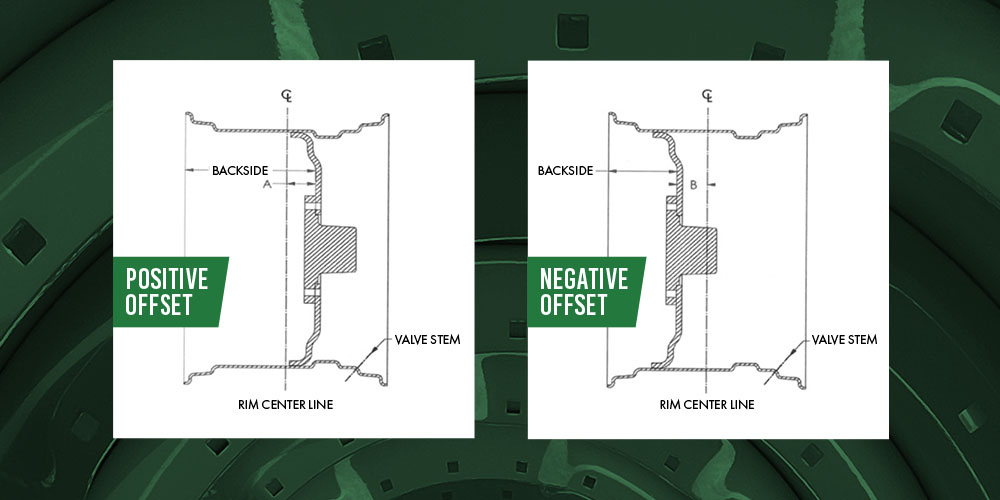
When it comes to wheels for off-road agriculture and construction equipment, the offset is the distance from the hub mounting surface to the centerline of the wheel. Knowing the correct wheel offset will help the tire dealer and equipment owner communicate on specifying the correct tire and wheel combination for the targeted application.
The 3 Types of Wheel Offset
There are three types of wheel offset for agriculture and construction equipment that tire dealers and equipment owners should understand when measuring for offset as it affects the stance of the machine.
- Positive Offset (Inset)
The hub mounting surface is in the front of the centerline of the wheel bringing it closer to the machine and creating a narrower stance. This is also referred to as Inset. - Negative Offset (Outset)
The hub mounting surface is behind the wheel centerline pushing the wheel away from the equipment creating a wider stance. This is also referred to as Outset. - Zero Offset
If no offset is present, the hub mounting surface is in line with the centerline of the wheel. The distance from the mounting pad and centerline of the wheel is zero.
Why the Right Wheel Offset Matters
Depending on the tires being used, the correct offset is needed to obtain the correct stance for equipment such as tractor/front implements, skid loaders, tractors, combines, application equipment and grain carts. The stance is important for stability, balance and row spacing needs. The correct offset is also needed to provide necessary clearance away from the machinery's body and other components.
Where to Get Offset Guidance
Your local Wold Rim & Wheel dealer can help specify the right wheel and tire combination for your machinery application. You can also email us or call (800) 443-9653 / 641-713-2205 for more information.